
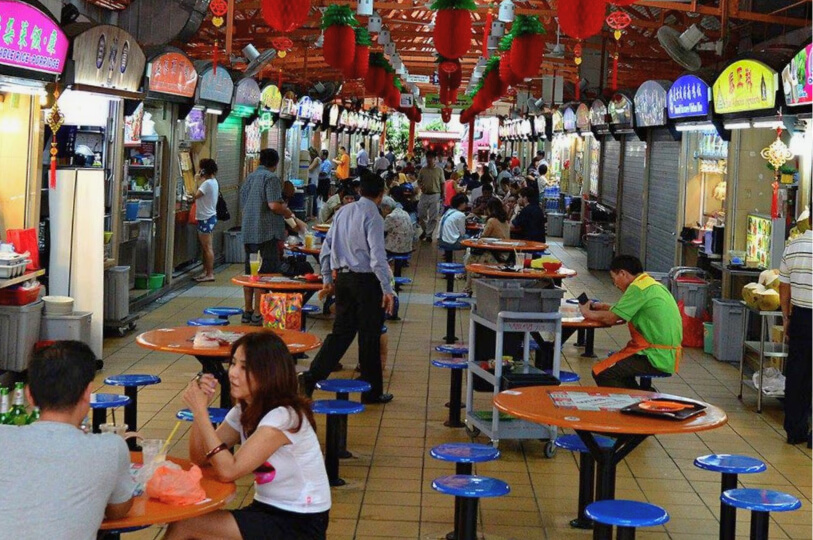
If you open any social media app right now and scroll for ten seconds, you will almost certainly see a pair of chopsticks lifting noodles in slow motion. You will see cheese being pulled apart until it snaps. You will hear a voiceover telling you about a “hidden gem” that has been operating in plain sight for thirty years, or a “must-try” dish that didn’t exist a week ago.
Singapore’s food scene is noisy. It is vibrant, yes, but it is also saturated. We live in an era where documentation has been replaced by content creation. The algorithm rewards speed, visual impact, and hyperbole. It asks for the “best,” the “cheapest,” and the “most viral,” often at the expense of the “true.”
At Eat Play Stay, we find ourselves thinking less about what is trending, and more about what remains.
The Problem with Speed
There is an inherent tension between good food and fast content. Good food; especially the kind deeply rooted in Singapore’s heritage; requires patience. A hawker wakes up at 3:00 AM to prepare a stock that won’t be ready until lunch. A chef spends years perfecting the hydration of a pizza dough.
When we reduce these processes to a fifteen-second clip, we strip away the context. We commodify the craft. The focus shifts from the flavour profile of a soup to how good it looks under a ring light. The danger of this speed is that it flattens our culinary landscape. It turns dining into a checklist of visual moments rather than an exploration of culture.
We believe that writing about food should not be a race. When we rush to declare something the “best” after a single bite, we do a disservice to the people who spent a lifetime cooking it.
The Value of Patience
Documentation requires a different pace. It requires sitting down, putting the phone away, and actually eating. It means returning to a place more than once to understand its consistency. It means asking why a dish tastes the way it does, rather than just describing how it tastes.
We see food writing as a form of cultural archiving. Singapore’s food culture is fragile. Hawkers are retiring; recipes are disappearing or evolving. If our record of this time is defined solely by what went viral on TikTok, we lose the nuance. We lose the stories of struggle, technique, and community that define our hawker centres and restaurants.
Patience allows us to look past the hype. It allows us to distinguish between a marketing gimmick and a culinary innovation. It gives us the space to appreciate the quiet excellence of a bowl of porridge just as much as a Michelin-starred tasting menu.
Our Approach: Experience First
This is why, at Eat Play Stay, we choose to move a little slower. We are not interested in being the first to cover a new opening; we are interested in being the most thoughtful.
Our editorial approach is structured around the lived experience. We look for rhythm and atmosphere as much as flavour. We value the “how” and the “why.” Whether we are discussing the technical execution of an Italian pasta or the social dynamics of a chalet stay, our goal is to respect the craft.
We write for the reader who wants to understand their city, not just consume it. We believe that a restaurant review should leave you with a framework for understanding your own meal, not just a recommendation of what to order.
Why This Matters
In a landscape dominated by noise, we believe there is still value in a quiet, composed voice. We believe that Singaporean diners are intelligent and curious. You don’t just want to know where to go; you want to know what makes a place significant.
This philosophy of slow, structured documentation is exactly how we approached one of our most comprehensive pieces. It isn’t about the newest cafe, but about one of the most enduring pillars of our food culture. For an example of how we apply this lens to the places that truly matter, we invite you to read The Ultimate Guide to Maxwell Food Center: Singapore’s Iconic Hawker Paradise.