
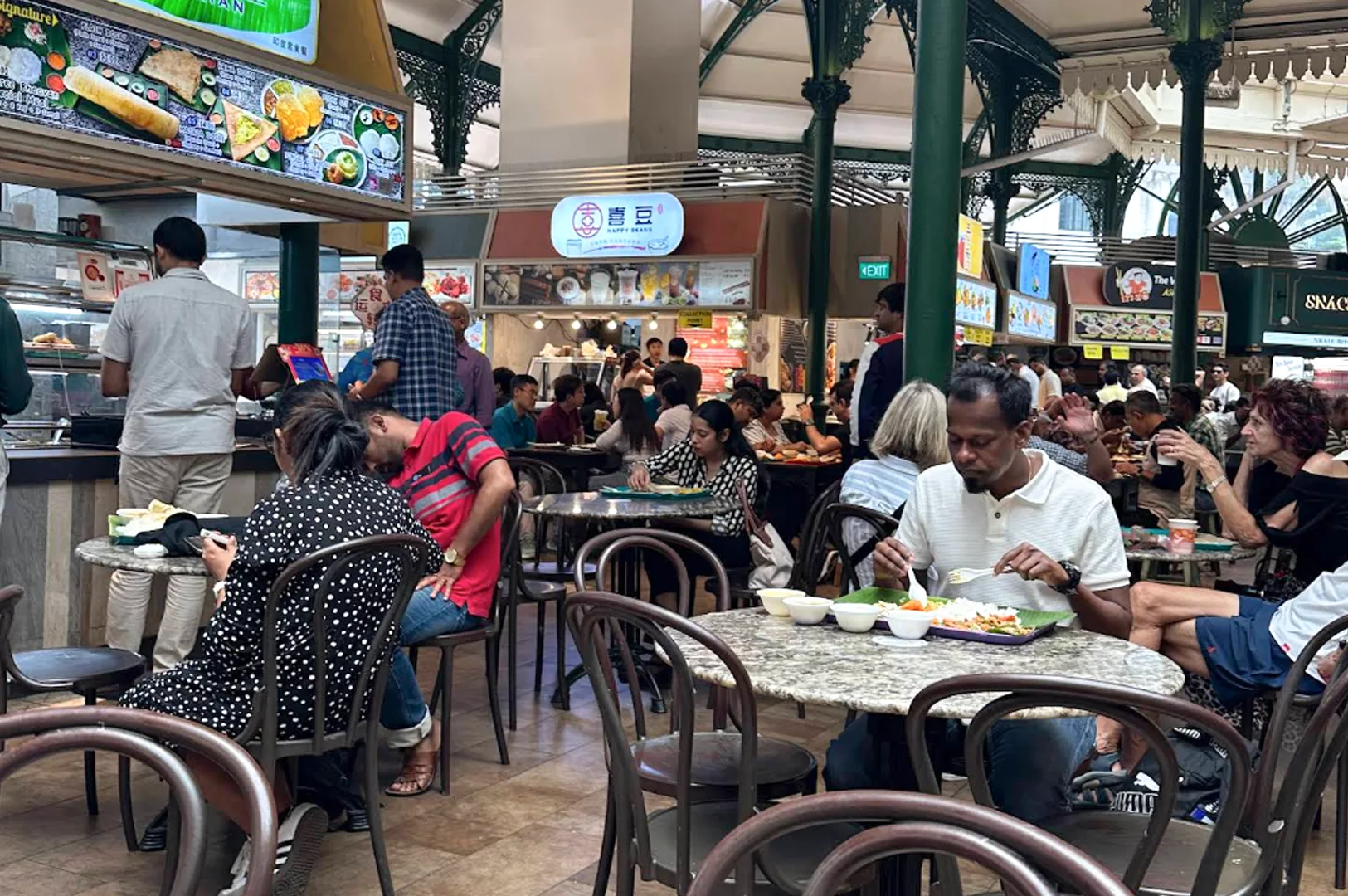
Singapore does not introduce itself loudly through food. It reveals itself slowly, in places where people gather without ceremony. Hawker centres are not designed to impress, yet they remain the most honest reflection of how Singapore eats, moves, and connects.
Step into any hawker centre during peak hours and you begin to understand something deeper than variety. You see routine, repetition, and quiet mastery. The same uncle preparing char kway teow for decades. The same aunt ladling soup with the same measured rhythm. These are not performances. They are continuations.
What makes hawker culture powerful is not nostalgia. It is consistency in a city that constantly changes.
Unlike curated dining experiences, hawker centres operate without narrative. There is no need to explain the story behind a dish because the story is already embedded in the act itself. Ordering, waiting, sharing tables, returning trays. These small rituals create a shared language across generations and backgrounds.
This is also where Singapore’s multicultural identity feels most natural. You move from Malay nasi lemak to Indian prata to Chinese roast meats within minutes. Not as a showcase, but as everyday life. That ease matters. It is not staged diversity. It is lived proximity.
Globally, food spaces are becoming more curated, more aesthetic, more intentional. Yet hawker centres resist that shift. They remain functional. And that is precisely why they endure.
Even organisations like the have acknowledged this ecosystem as cultural heritage, but recognition does not change how locals experience it. For most Singaporeans, hawker centres are not heritage sites. They are simply where you eat on a Tuesday afternoon.
There is also something uniquely grounding about the affordability. Not just because it is cheap, but because it allows food to remain accessible without losing quality or identity. You do not need an occasion to eat well here.
Yet, there is an ongoing tension. Rising costs, younger generations moving away from the trade, changing expectations. The question is not whether hawker culture will disappear. It is how it will evolve without losing its essence.
The future may bring cleaner layouts, digital payments, or curated stalls. But the core must remain untouched. The human element of repetition, familiarity, and quiet pride.
Because hawker culture is not about dishes alone. It is about how Singapore eats without overthinking it.
And perhaps that is why it continues to matter.
If you want to explore where this culture is still thriving today, read: Maxwell Food Centre Singapore Best Hawker Stalls Guide