
The first time I tried to grab a quick Japanese lunch in Orchard, I lost twenty minutes just finding the place.
I had a tonkatsu set in mind, somewhere near Orchard MRT. By the time I navigated the underpasses and the lift queues, half my lunch break was gone. I ended up scarfing the cutlet, barely tasting it, and rushing back to the office with grease on my collar and a vague sense of regret.
That meal taught me something. In Orchard, the right lunch isn’t just about the food. It’s about the format, the timing, and knowing exactly where you’re heading before you leave your desk.
I’ve eaten more weekday lunches along this stretch than I can count. Let me save you the wandering and the rushed bites.
Pick Your Format First at the Best Japanese Restaurant Style
This is the thing I wish someone had told me years ago. Don’t start by choosing a restaurant. Start by choosing what kind of meal you actually have time for.
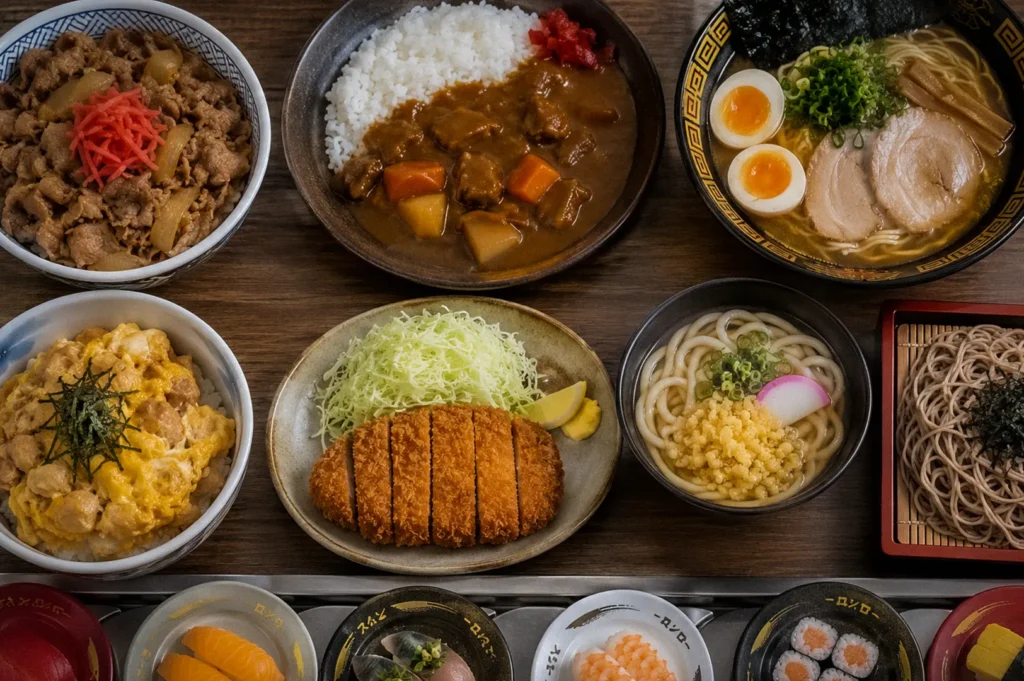
- Gyudon is my go-to when the clock’s against me. A bowl of beef over rice, sweet and savoury, usually S$6 to S$12. You’re in and out in 20 to 35 minutes. Ordering is structured, the meal arrives fast, and there’s no fuss. When I have 30 minutes flat, this is what I reach for.
- Japanese curry rice is the comfort choice. Smooth, rich curry over rice, customisable with toppings. It sits in that same affordable bracket and fills you up properly. I order it on the grey days, the ones where you just want something warm.
- Ramen is reliable and satisfying, but be honest with yourself about time. Between the queue and the eating, you’re looking at 30 to 45 minutes, sometimes more. Eat it hot — the noodles soften fast, and a bowl left to sit becomes a sad, bloated thing.
- Donburi is the balanced middle ground. A rice bowl with toppings, somewhere between speed and substance. Good portion, decent variety, S$12 to S$20 for the heartier ones. Popular choices like wagyu don and kaisen chirashi don bring premium ingredients to the table, making for a satisfying meal.
- Udon and soba are what I pick when I want something lighter. Quick, clean, easy on a heavy afternoon. A bowl of cold soba on a hot day is one of life’s quiet pleasures.
- Tonkatsu is the heavyweight. Crisp breaded pork, shredded cabbage, rice, soup. It’s filling and genuinely good food, but it’s slower — 45 to 75 minutes for a proper sit-down set. Save it for the days you’re not racing back.
- Conveyor sushi is fun and flexible. But it’s also where lunch budgets quietly unravel. More on that later.
If you want to learn more about the best Orchard Plaza food, click here to discover six spots worth your calories.
Pro tip: Match the format to the minutes you have. Gyudon or curry for a tight break. Ramen if you’ve got the better part of an hour. Tonkatsu only when nobody’s waiting on you back at work.
Timing Is Half the Battle
Here’s the single most useful thing I’ve learned about Orchard lunches: when you arrive matters as much as where you go.
The weekday rush runs from 12:00pm to 1:30pm. That’s when the office workers, retail staff and shoppers all descend at once, and that’s when queues turn a 30-minute meal into a 60-minute ordeal.
I aim to arrive before 12:00 or after 1:30. A window around 11:15 to 11:45 gets you seated before the crowd, food served in front of you while everyone else is still queuing. After 1:30, the rush thins and you can actually breathe.
Weekends are a different beast. Shoppers, families and tourists fill the malls, so go earlier than you think you need to.
Insider knowledge: If you’re stuck eating at peak time, skip the famous ramen shops with the long lines and pick a gyudon or curry place instead. High turnover, structured ordering, no drama. You’ll be done before the ramen queue has even moved.
What It Actually Costs at Far East Plaza and Ngee Ann City
Let me be straight about money, because Orchard has a reputation for being dear — and it isn’t always deserved.
A simple gyudon, curry rice, or udon runs S$6 to S$12. Genuinely affordable.
Casual filling meals — ramen, donburi, a basic tonkatsu set, sushi sets — land around S$12 to S$20.
A more comfortable sit-down lunch, with sashimi bowls or a proper restaurant set, sits at S$20 to S$35.
Buffets and premium sushi lunches climb past S$30, and they’re not built for a quick meal anyway.
The thing that trips people up is the pricing notation. You’ll see “nett“, “+“, or “++” on menus. Nett means the price is final. A “++” means service charge plus GST — roughly 19% on top of what’s printed. So that S$30++ set is closer to S$36 once the bill arrives.
I learned this the embarrassing way, counting out cash for a S$28 set and coming up short because I’d forgotten the “++“. Now I just add a fifth to whatever I see in my head.
Pro tip: For predictable spending, order a fixed set meal or a single rice bowl rather than ordering à la carte dishes. You know the price before you sit down, and there are no surprises on the bill.
Know Your Orchard Sub-Areas: Palais Renaissance, Far East Plaza, and More
Orchard isn’t one place. It’s a chain of connected malls, and choosing the right cluster saves you the wandering I suffered through.
- Somerset is my pick for fast, casual Japanese lunch. With 313@Somerset and Orchard Central side by side, you’ve got rice bowls, ramen and casual spots clustered close. Easy to navigate, quick to get in and out, and perfect for diners craving good food without fuss.
- Orchard MRT leans more polished. This is where I head for proper sushi platters, tonkatsu, and the more comfortable sit-down restaurants. Better for a relaxed lunch than a rushed one.
- Dhoby Ghaut, anchored by Plaza Singapura, is solid for Japanese curry and accessible casual chains. Transit-friendly too, if you’re moving between lines.
- Far East Plaza is the one I send people to when they want something older and more value-oriented. It’s less polished, a little worn at the edges, but there’s honest food tucked inside if you’re willing to look.
Insider knowledge: Pick the mall by its nearest MRT exit before you leave. Walking across Orchard for one specific restaurant eats your whole break. Decide on the cluster, then choose within it — not the other way round.
The Mistakes I Keep Seeing at Japanese Restaurants
- Choosing a buffet on a short break. I did this once, full of confidence, with 45 minutes to spare. By the time I’d queued, been seated and made my first round, I had maybe 15 minutes to actually eat. Buffets need 60 to 90 minutes minimum. They’re for leisurely meals, not lunch breaks.
- Losing track at conveyor sushi bars. Those little plates look harmless. But they add up faster than you’d believe. I’ve sat down meaning to spend S$15 and walked out having paid double, because each plate slid past and I kept reaching. If you go, track your plates as you stack them. Set yourself a limit before the first one arrives.
- Forgetting the “++”. Said it already, but it’s the one that catches people most. The menu price is rarely the final price. Plan for the extra.
- Letting ramen sit. Noodles soften, broth cools, the whole bowl loses its edge. Eat it while it’s hot, even if it means slurping faster than feels polite. Slurping’s fine here anyway.
- Overlooking the complete Japanese cuisine experience. Japanese dining isn’t just about the main dishes; starters, salads, grilled items, and desserts all play a role in a satisfying meal. Missing out on these can mean missing the full array of flavours and textures that Japanese cuisine offers.
- Ignoring drinks pairing. Whether it’s sake, beer, or other drinks, pairing your meal with the right beverage can impress your guests and elevate your dining experience.
Explore more Japanese dining in Orchard, from casual meals to after-hours spots. Check out our guide: Japanese Food in Orchard Singapore.
Frequently Asked Questions About Japanese Lunch and Omakase Dining
1. What makes Shoukouwa unique among Japanese restaurants in Singapore?
Shoukouwa is Singapore’s only two-Michelin-starred sushi restaurant, renowned for its exceptional omakase featuring premium, seasonal seafood flown daily from Tokyo’s Toyosu Market, guaranteeing top-quality and authenticity.
2. How affordable are omakase menus at places like Sushi Yujo and Ganko Sushi?
Sushi Yujo offers creative omakase starting at $68 for lunch, while Ganko Sushi’s sets begin at $98. Both use seasonal ingredients imported regularly from Japan, delivering quality without overspending.
3. What is kappo-style dining at Ki-Sho?
Ki-Sho’s kappo-style omakase, from $160, is an interactive experience where chefs prepare seasonal dishes live, focusing on chef’s choice in an intimate setting for small groups or couples.
4. What are traditional Japanese lunch components and dishes?
Traditional lunches balance carbs, proteins, and vegetables, featuring staples like short-grain rice, soy sauce, mirin, and dashi. Classic dishes include miso soup, oyakodon (chicken and egg simmered in dashi), kitsune udon (noodle soup with sweet tofu), and omurice (fried rice wrapped in an omelette).
5. What can I expect at sushi counters and omakase experiences?
Sushi counters serve seasonal seafood flown from Japan, with chefs preparing sushi live. Omakase involves multi-course meals highlighting the chef’s choice and fresh seasonal produce. Premium sashimi at places like Sushi Sato and Tomi Sushi features ultra-fresh seafood flown in from Japan, offering an authentic experience.