
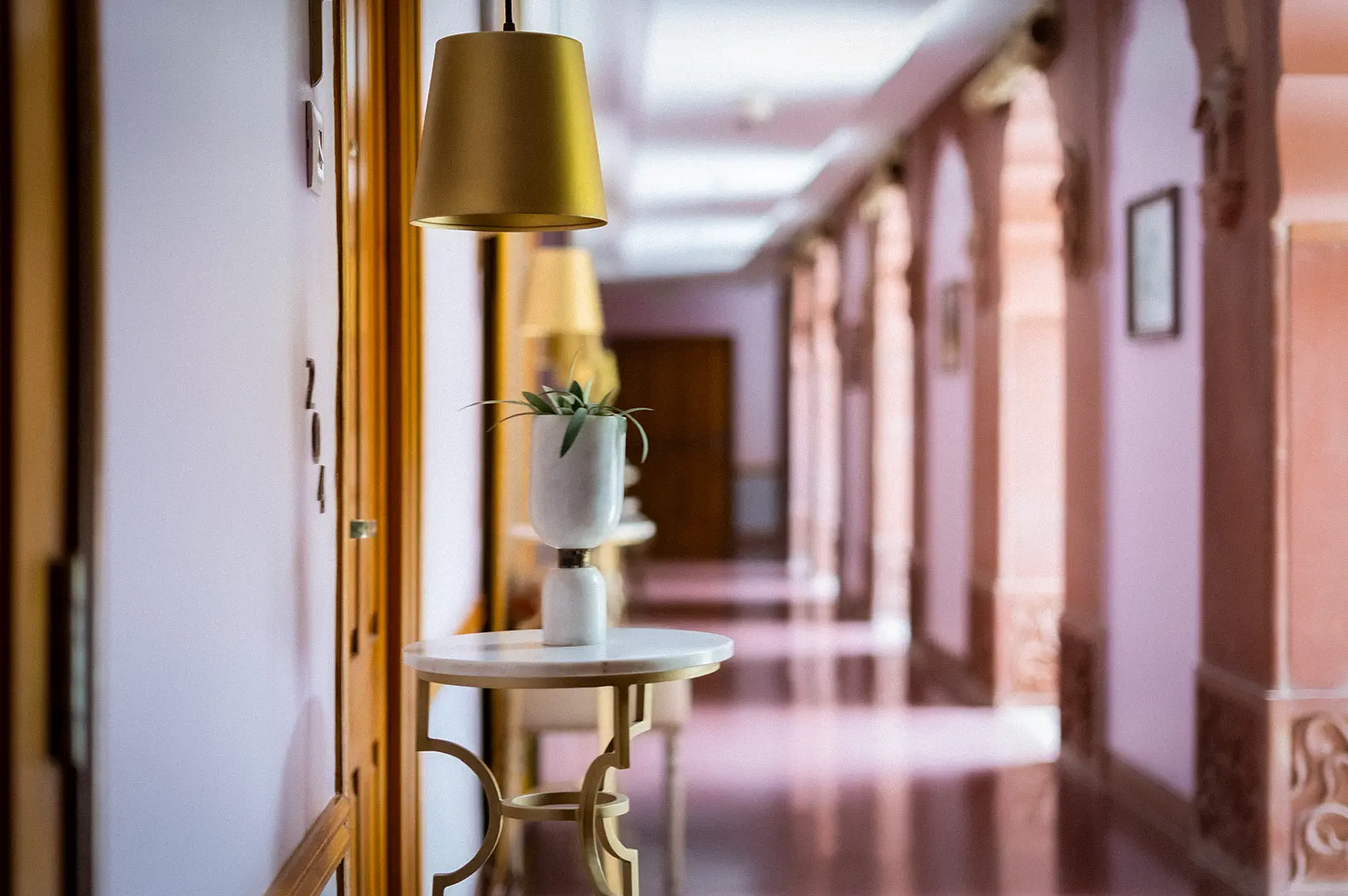
You notice it first in small decisions.
Whether to go out again.
Whether to stay in a little longer.
Whether to walk one more block or turn back early.
Hotels in a foreign city quietly reshape how you move, even when nothing about you has changed.
Bangkok does this in a very specific way.
You step out in the morning with a rough plan, but the city quickly dissolves it. The heat arrives early. The streets are already active. Something always feels slightly more intense than expected.
So you return to the hotel earlier than planned.
Not out of fatigue exactly.
More like recalibration.
That return becomes part of the rhythm.
Lifts. Lobby. Room.
A short reset before deciding what comes next.
Not because the hotel interrupts the city experience, but because it becomes a reference point you keep returning to throughout the day.
You leave. Then you come back.
Then you leave again.
Each return slightly changes how you interpret the city outside.
The hotel is not just a place to stay.
It becomes a kind of pause between versions of yourself in the same day.
Morning you feels different from afternoon you.
Afternoon you feels different from night you.
And the hotel quietly sits in the middle of all three.
It becomes a reset point, not a destination.
That is something you rarely notice in your own city.
In Singapore, hotels are usually associated with staycations or short breaks. The idea is contained.
But in Bangkok, or any dense city you are temporarily passing through, hotels take on a different role.
They are no longer the main experience.
They structure the experience.
You start making decisions around them without realizing it.
Is it worth going out again if the traffic is heavy?
Do you go further into the city or stay closer to the area?
Do you eat nearby or return first before deciding?
These small questions quietly shape the day more than any itinerary.
The infinity pool, the skyline, the room itself — these are not just amenities.
They are interruptions in the middle of motion.
Moments where the city becomes distant enough to observe again.
From above, Bangkok stops feeling chaotic in the same way.
You begin to see patterns instead of pressure.
Movement instead of noise.
Distance instead of urgency.
Then you go back down again.
And the city feels different the second time.
This back-and-forth becomes the real experience.
Not the hotel.
Not the city.
But the rhythm between them.
Leave. Return. Re-enter. Repeat.
Eventually, you stop thinking of the hotel as a place you are staying in.
It becomes the place you keep returning to in order to make sense of everything else.
That is probably why certain stays feel more memorable than others.
Not because they were more luxurious.
But because they changed how you moved through the day.
And long after checkout, you remember that rhythm more than anything else.
Not the view.
Not the pool.
But the pattern of leaving and coming back.
And how, for a brief moment, a city felt like it had a center point you could return to.
For travellers looking to experience a more timeless and quietly elegant side of Bangkok hospitality, our guide to Bangkok hotels explores how the hotel balances city energy with calm perspective, and why it works so well as a base for slower, more intentional travel.