
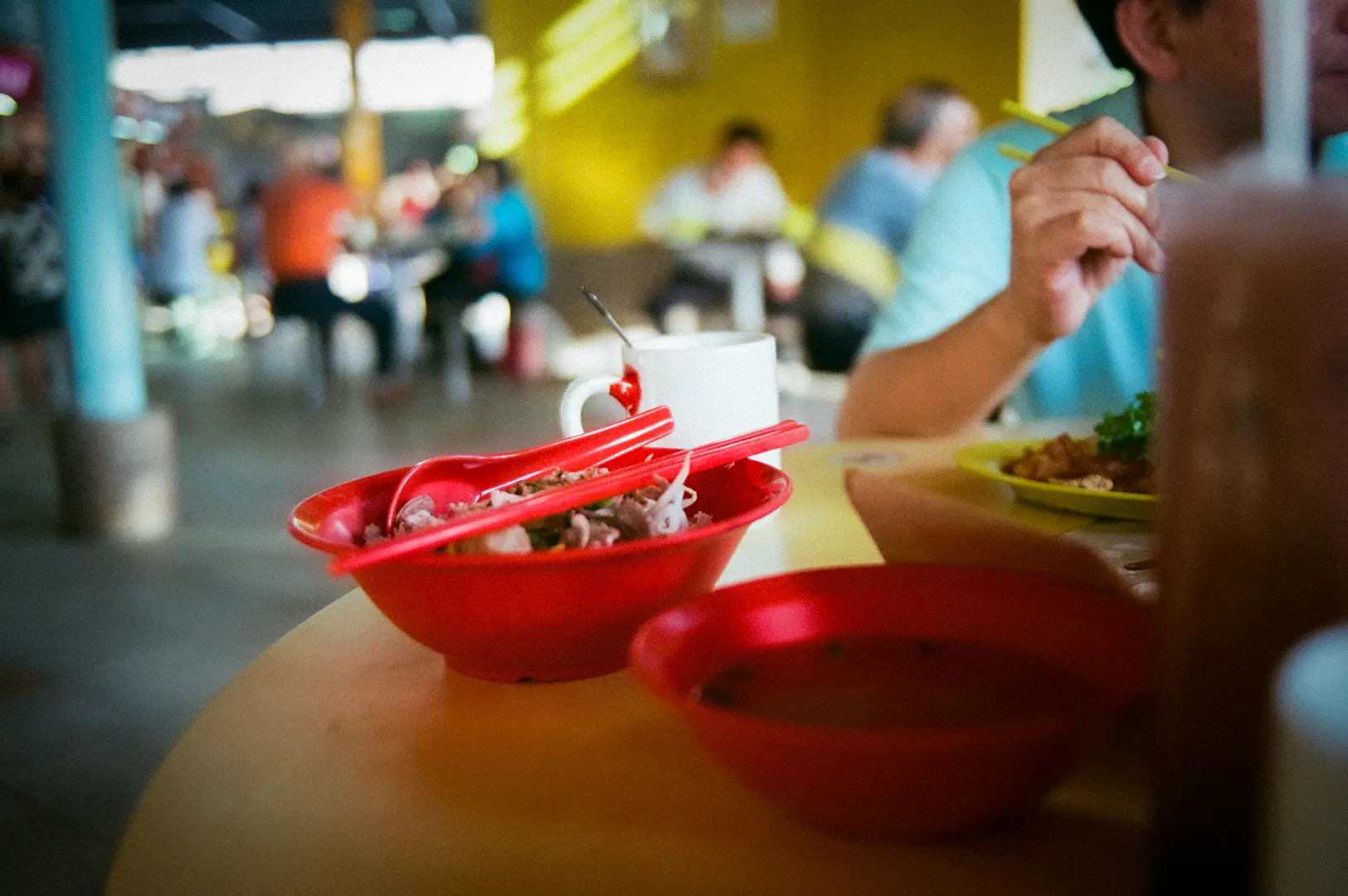
I was sitting in a food court recently when I noticed something unusual.
Not unusual enough for anyone else to pay attention to it.
Just unusual enough to make me stop scrolling on my phone.
At one table, a group of colleagues were having lunch together. One was eating Japanese curry. Another had ordered ban mian. Someone else was halfway through a plate of nasi lemak.
Three completely different meals. One conversation.
A few tables away, a family was doing the same thing. The parents were sharing zi char dishes while the children had somehow convinced everyone that fast food was the correct choice.
Nobody seemed bothered by the mismatch.
In fact, that’s exactly how Singapore eats.
And the more I thought about it, the more I realized how rare that actually is.
In many countries, eating together usually means eating the same thing.
You choose a restaurant.
You sit down.
You order from the same menu.
The experience revolves around a shared cuisine.
Singapore works differently.
Here, eating together often means everyone ordering whatever they feel like and meeting back at the same table.
It sounds like a small detail.
But it says a lot about the city.
Food courts are one of the few places where diversity isn’t something people talk about. It’s simply how things function.
Chinese food beside Indian food. Malay dishes beside Korean stalls. Western food beside local favourites.
Nobody finds this remarkable because it has always been normal.
Yet when you step back and look at it, the entire setup feels like a reflection of Singapore itself.
Different preferences. Different backgrounds. Different tastes. All sharing the same space.
That’s probably why I enjoy spending time in food courts more than I expected.
Not because they’re glamorous.
Not because they’re trendy.
But because they’re honest.
Restaurants often present a curated version of dining. Everything is designed to create a particular atmosphere.
Food courts don’t really do that.
They’re practical.
People come because they’re hungry.
The environment isn’t trying to impress anyone.
And because of that, you end up seeing everyday life more clearly.
Students discussing assignments.
Office workers squeezing in a quick lunch before their next meeting.
Families deciding where to spend the rest of the afternoon.
Retirees chatting over coffee with no obvious rush to be anywhere else.
These moments happen every day.
Most people walk past them without noticing.
But together they create a surprisingly accurate portrait of the city.
What fascinates me most is how food courts solve a problem that seems impossible elsewhere.
Getting a group of people to agree on where to eat.
Anyone who has organised a meal with friends knows the struggle.
One person wants noodles.
Another wants rice.
Someone is craving something spicy.
Someone else insists they’re trying to eat healthy.
In a restaurant, this becomes a negotiation.
In a food court, it’s barely a discussion.
Everyone gets exactly what they want.
Then everyone sits together anyway.
It’s such a simple system that we rarely think about it.
Yet it quietly removes friction from everyday life.
Maybe that’s why food courts remain so popular despite the endless arrival of new cafés and restaurants.
They’re not trying to be destinations.
They’re trying to be useful.
And usefulness has a way of lasting.
The older I get, the more I appreciate places that simply work.
Places that don’t need a marketing campaign to justify their existence.
Places that become part of people’s routines because they genuinely serve a purpose.
Food courts fall into that category.
They’re woven into daily life so completely that many locals stop noticing them.
But if you slow down for a moment and look around, they’re surprisingly revealing.
Not just about food.
About people.
About habits.
About how Singapore functions when nobody is performing for social media.
The meals change every day.
The crowds come and go.
But the role these spaces play remains remarkably consistent.
They’re where Singapore gathers, one tray at a time.
And that’s far more interesting than any single dish being served.
For visitors looking to experience this side of Singapore, our guide to Explore Food Plaza Singapore highlights some of the food courts worth visiting.